
Hot tub ideas for farms, wine estates and country getaways
There is something about getting away to the countryside that changes the pace of a weekend. The road gets quieter, the landscape opens up, and suddenly there is time for a long lunch, an afternoon outdoors and an evening spent doing very little. For farms, wine estates and country accommodation, creating spaces that encourage guests to slow down can be just as important as the accommodation itself.
A hot tub can be a particularly natural addition to this kind of setting. Surrounded by vineyards, mountains, orchards, indigenous planting or open countryside, a well-positioned hot tub becomes more than an amenity. It becomes part of the experience — somewhere guests can spend an hour taking in the landscape, warming up on a cool evening or simply enjoying the fact that they have nowhere else to be.
Let the landscape do the work
The setting is one of the greatest advantages of a rural property, so a hot tub should make the most of it. Rather than placing it wherever there happens to be space, look for the view that guests will remember: a line of mountains, vineyards stretching into the distance, a valley, a dam or simply an established garden with a strong sense of place.
Think about the view from inside the tub as well as the view towards it. A position that catches the last light of the afternoon can transform the experience, while an elevated position can make the surrounding landscape feel even more expansive. The best location may not be immediately next to the accommodation unit; sometimes a short path through the garden or across a deck makes the arrival feel like part of the experience.
Make it feel connected to the property
A hot tub works best when it feels as though it belongs there.
On a wine estate, that might mean positioning it alongside a timber deck overlooking the vines, surrounded by natural planting and understated lighting. On a working farm, it could sit beside a converted barn, beneath established trees or overlooking an open paddock. For a country cottage or private retreat, the setting might be more intimate — a secluded corner of the garden with a view across the surrounding landscape.
The materials around the tub can help reinforce that connection. Stone, timber, gravel, natural planting and weathered finishes tend to sit comfortably within rural environments, allowing the hot tub to become part of the landscape rather than looking like something that has simply been placed in it.
Create a private escape
One of the attractions of a countryside getaway is the feeling of having space to yourself. Privacy therefore matters, particularly when a hot tub is being provided for guests.
Natural screening can be more effective than building a completely enclosed structure. Planting, hedges, trees, reeds and strategically positioned walls or screens can create a sense of seclusion while retaining the feeling of being outdoors. The aim is to give guests a private space without losing the views, fresh air and connection to the surrounding landscape that brought them there in the first place.
For accommodation providers, it is also worth considering privacy between units. If several cottages or cabins share a property, each hot tub should feel like a private amenity rather than part of a communal area.
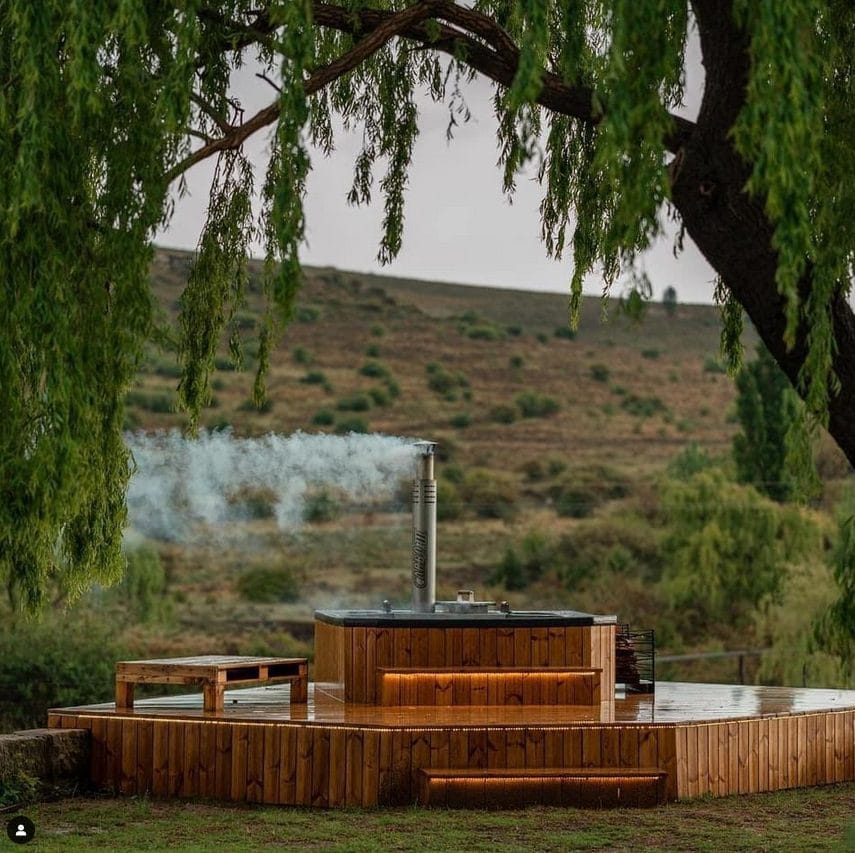
Carbo III installation at Rosendal Country Retreat
Think beyond summer
A hot tub can add value to a country property precisely because it isn't dependent on warm weather.
In fact, some of the most memorable hot tub experiences happen when the air is cool. There is something particularly appealing about stepping into warm water on a crisp winter evening, with a fire burning nearby and the surrounding landscape quiet and dark.
This can make a hot tub a useful addition to accommodation that wants to appeal beyond the traditional summer or holiday season. Instead of being an amenity that is used only when the weather is warm, it can become part of the reason guests choose a property during cooler months.
A wood-fired hot tub adds another layer to that experience. The fire becomes part of the ritual, with guests involved in preparing the tub and watching the water gradually heat. Rather than simply pressing a button and waiting, there is a process to the experience that feels particularly appropriate in a rural setting.
Make the journey part of the experience
The experience doesn't have to begin when guests get into the water.
A short pathway leading from the accommodation to the hot tub can create a sense of arrival. It might pass through a garden, along a deck or beneath trees before opening onto the tub and its surrounding space. Even something as simple as stepping stones through planting can make the journey feel deliberate.
Consider what guests encounter when they arrive. A place to leave towels, somewhere comfortable to sit, discreet lighting and a nearby surface for drinks can make the space feel considered without over-designing it. These details matter because a good hot tub experience is rarely just about the tub itself. It is about everything around it.
Pair it with the things guests already love
The strongest rural experiences often combine several simple pleasures.
On a wine estate, a hot tub can complement wine tasting, cellar visits and long lunches. At a farm stay, it might sit alongside hiking, cycling, fishing or simply exploring the property. At a secluded country cottage, the appeal may be even simpler: a book, a fire, a bottle of wine and nowhere that guests need to be. Think about what makes the property distinctive and allow the hot tub to reinforce it. The aim isn't to add another attraction for the sake of having one. It is to create a natural extension of the experience that already exists.
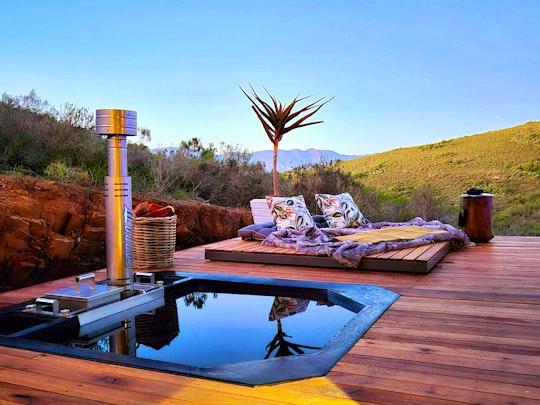
Carbo III installation at Renosterbos
Give guests something to remember
Accommodation is increasingly about more than providing a comfortable room. Guests remember the moments that feel different from everyday life — the view from the deck, breakfast outdoors, a sunset over the mountains or an evening spent in warm water beneath the stars.
A hot tub can create exactly that kind of moment. For a farm, wine estate or country retreat, it can become a signature feature that guests associate with the property. It may even become one of the images they remember most clearly after they leave: steam rising from the water on a cold morning, the vineyards turning gold in the late afternoon, or the glow of a fire against a dark countryside sky.
Keep it simple
There is a temptation to overcomplicate an outdoor amenity. More furniture, more structures, more features and more decoration can easily dilute what makes a rural setting special in the first place.
A hot tub doesn't need to compete with the landscape. In many cases, the best approach is the simplest one: choose a beautiful position, create enough privacy, provide somewhere comfortable to sit, add subtle lighting and let the surroundings provide the atmosphere. The landscape is already the luxury. A wood-fired hot tub simply gives guests a different way to experience it.
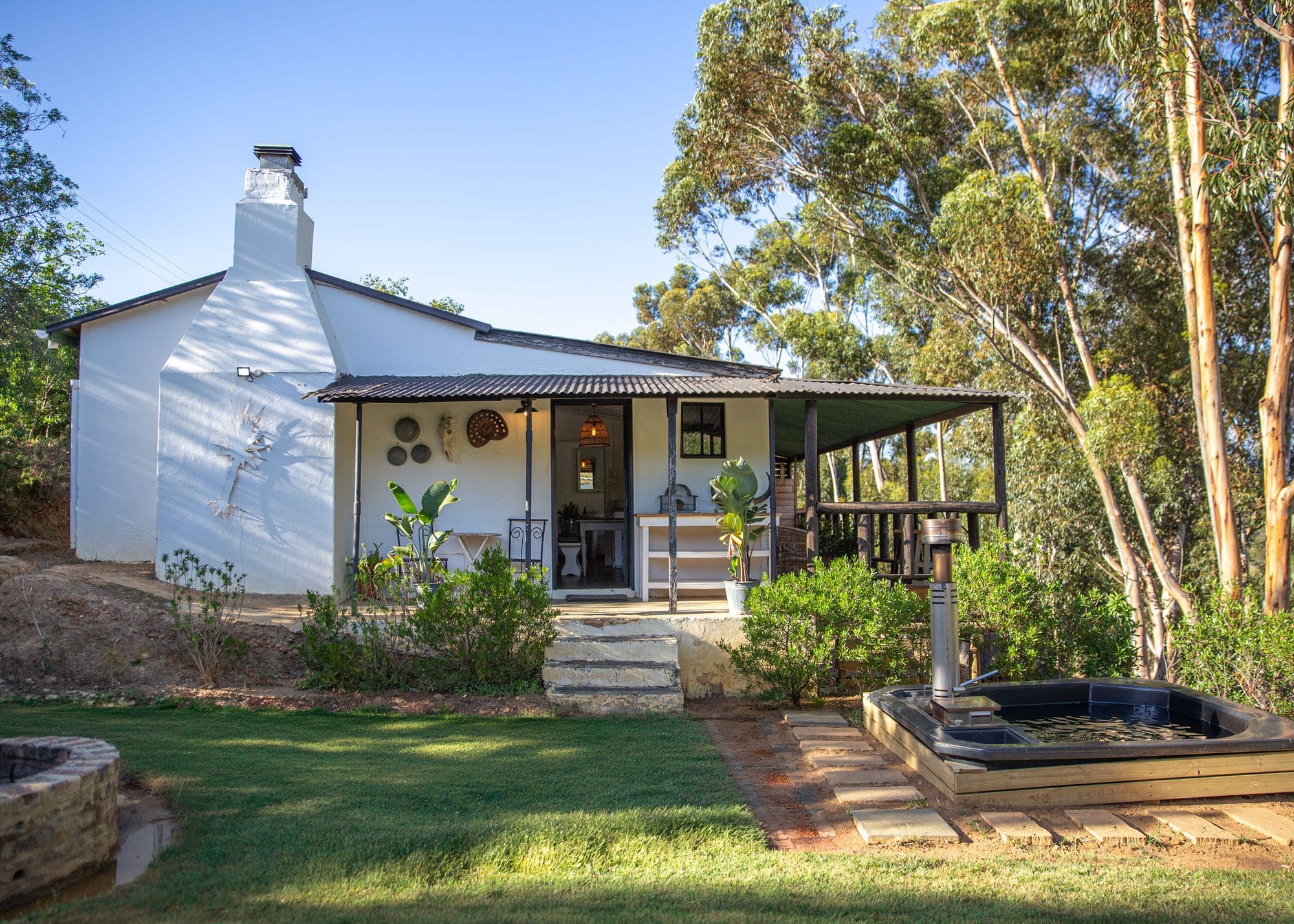
Carbo III installation at Cornelskop Farm Stays
A natural fit for country escapes
Farms, wine estates and country accommodation have something that is increasingly difficult to find in everyday life: space to slow down. A hot tub can enhance that quality without changing the character of the property, giving guests another reason to spend time outdoors and another experience to associate with their stay.
Whether it overlooks a vineyard in the Cape Winelands, sits beneath trees on a working farm or occupies a secluded corner of a mountain retreat, the right hot tub can feel less like an added amenity and more like it was always meant to be there. Sometimes, that's exactly what makes an amenity memorable.