
How to create the perfect
outdoor retreat at home
There is something about a good outdoor space that makes you want to slow down. A chair angled into the morning sun. A fire crackling as the evening cools. A view that makes you forget to check your phone.
You don't need a major renovation to get there. Most outdoor retreats come down to five ingredients, layered thoughtfully: setting, privacy, comfort, warmth and water. Get those right, and a garden stops being a space you walk through and becomes a place you want to be.
Start with the setting
The best outdoor spaces work with what's already there rather than fighting it.
If your garden has a view, angle the space towards it. If you're framed by trees or mature planting, let them create a natural sense of enclosure. Even a small urban courtyard can feel like a retreat once it's positioned well.
Pay attention to where the sun lands throughout the day and where the light goes as evening draws in. And don't assume everything needs to sit right outside the back door. Pulling a seating area or hot tub a little further into the garden can turn a two-minute walk into the feeling of arriving somewhere else entirely.
Build in privacy
A retreat needs to feel like yours.
That doesn't mean fences and screening panels. Planting can do the job more gracefully — a loose hedge, ornamental grasses or a climber trained along a fence line. These soften a boundary rather than announcing it, allowing the space to feel sheltered without feeling closed off.
Walk your garden at the times you'll actually use it and check the sightlines — from neighbouring windows, from your own house and from the street. The aim isn't total seclusion. It's creating enough distance from other eyes that you stop noticing them.
Prioritise comfort
None of this matters if the space isn't actually comfortable to spend time in.
Furniture is where it's worth paying attention. Choose pieces built for lingering, not just seating — deep cushions, a chair you could read a whole book in, a low table within arm's reach for a coffee or a glass of wine. Add throws for when the temperature drops.
If a hot tub is part of the plan, keep towels and robes somewhere close so getting in and out doesn't break the mood. Small domestic touches — the kind you'd use to make a living room feel inviting — translate surprisingly well outdoors.
Add warmth
Outdoor spaces tend to earn their keep once the light starts to fade and the air cools.
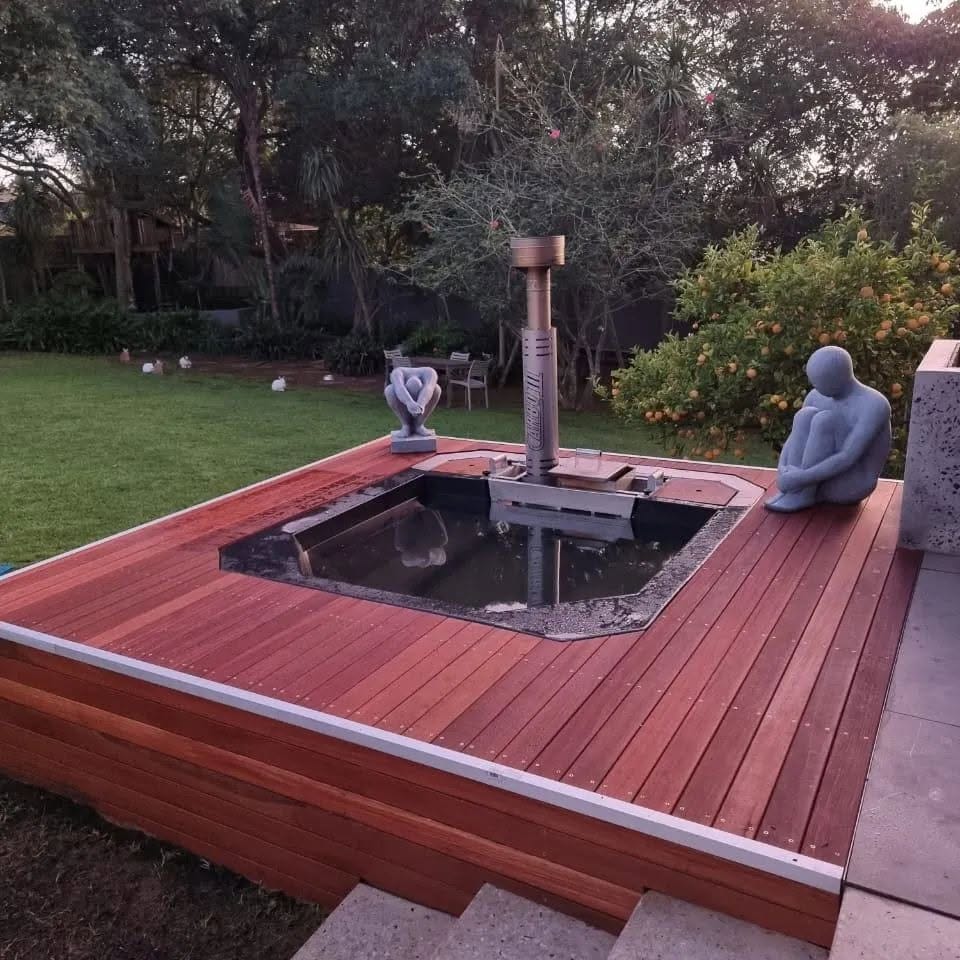
Fire is what makes that possible. A fire pit, a built-in fireplace or the glow of a wood-fired stove all do more than provide warmth. They give the eye somewhere to rest and the evening a natural centre of gravity. There's a reason people gather around fire without being asked to.
A wood-fired hot tub folds this into the experience itself. Lighting the stove and watching the water climb towards temperature isn't simply a chore before the relaxing part begins — it is part of the ritual.
Bring in water
Water has always shaped how we design spaces for rest. A pool suggests luxury and a place to cool off. A plunge pool is sharper — brisk, invigorating and over quickly.
A hot tub does something different again. Warm water outdoors, under an open sky, is one of the few things that reliably slows people down. It can turn an ordinary Tuesday evening into something closer to a short break. Wood-fired hot tubs suit this kind of setting particularly well because they don't require a polished, modern environment to feel at home. Timber, stone, natural materials and an informal garden all work naturally with them. Fire and water have a way of belonging together.
Design for lingering
A retreat shouldn't be a space you pass through on the way to somewhere else. Give people reasons to stay put. A table invites a long lunch. Good chairs invite reading. Low, warm lighting invites the evening to stretch on. A fire nearby invites everyone to stop checking the time.
Think in terms of the day rather than one fixed setup. Morning coffee wants something different from a Friday-night fire, while a lazy weekend afternoon calls for something different again. The gardens people actually use are flexible enough to hold all of these moments, rather than being designed around just one.
Let the tub earn its place
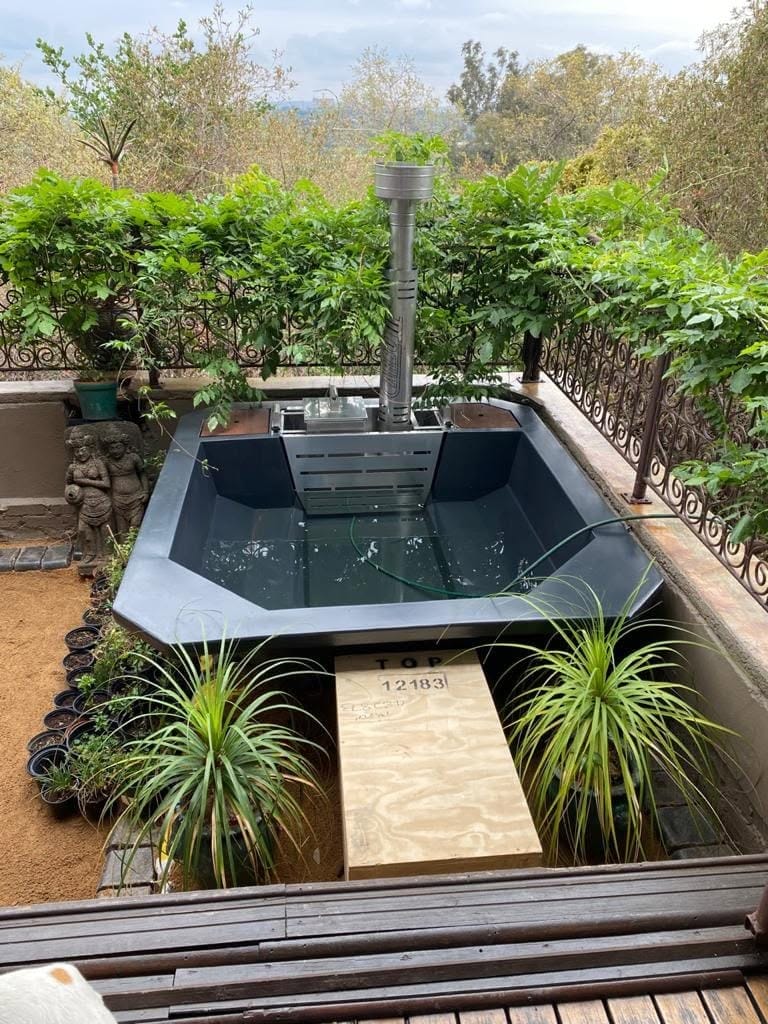
Resist the urge to drop a hot tub into whatever gap happens to be free. Treat it instead as part of the garden's design. Give it the best sightline in the space. Surround it with planting so it feels grown-in rather than installed. Tie it to a deck or paved area so the transition from garden to water feels deliberate. Low, warm lighting along the path and around the seating can do more for atmosphere than any single feature. It should guide you through the space, not compete with the darkness.
Done well, the hot tub doesn't have to dominate the garden to feel like its heart.
An experience, not just a space
What separates a garden from a retreat is usually a moment, not a feature. It is the ritual of lighting the fire at the end of a long day. Warm water under a clear sky. A slow Sunday morning with coffee and nowhere to be. None of this requires recreating a resort in your back garden. The most memorable retreats tend to be the simplest — a good setting, real comfort, warmth, water and permission to switch off.
You don't have to travel to get that feeling. With the right combination of setting, privacy, comfort, warmth and water, a wood-fired hot tub can turn your own garden into the place you escape to — no packing, no driving, no leaving home required.